A podcast lets people hear how you think and talk before they ever call your office. For a personal injury firm, that matters: most people pick a lawyer they feel they can trust, and a voice they have already heard explaining their situation is a strong start. A podcast will not replace advertising or referrals, but done steadily it builds recognition in your market, gives you content for every other channel and opens doors with referral sources. This guide covers how to plan, record and publish a lawyer podcast, and the rules that apply.
Why a podcast can work for a law firm
- Trust before the first call. Listeners spend time with your voice and your explanations, which no short ad can do.
- Local authority. A show about injuries, insurance and safety in your area makes your firm the name people associate with those topics.
- Content for every channel. One episode can become a video, short clips, a blog post, a newsletter item and social posts.
- Relationships. Inviting doctors, chiropractors, safety advocates or other attorneys as guests builds referral relationships naturally.
Pick your audience first
The most common mistake is making a show for other lawyers when the firm wants clients. Decide who you are talking to before anything else:
- People who may need you. Injured people and their families want plain answers: what to do after a crash, how insurance claims work, what a case involves. This is the audience that can turn into clients.
- Referral sources. Medical providers and other professionals want to know how you work and how you treat the people they send you.
- Other lawyers. A show for the profession can build co-counsel and referral relationships, but it rarely brings in clients directly.
Choose a format you can keep up
Consistency matters more than length. A shorter episode that comes out on a regular schedule beats an ambitious show that stops after a few episodes. Common formats include:
- Question and answer. You answer the questions people ask in consultations. These are easy to plan and match what people search for.
- Interviews. A guest brings expertise and their own audience, and the conversation carries the episode.
- Local topics. Dangerous intersections, new traffic laws, community events and safety campaigns in your area.
- Explainers. One topic per episode, such as how a demand letter works or what happens at a deposition.
Pick one main format, plan a list of topics before you launch so you are never stuck for an idea, and choose a schedule you can keep.
Equipment and setup
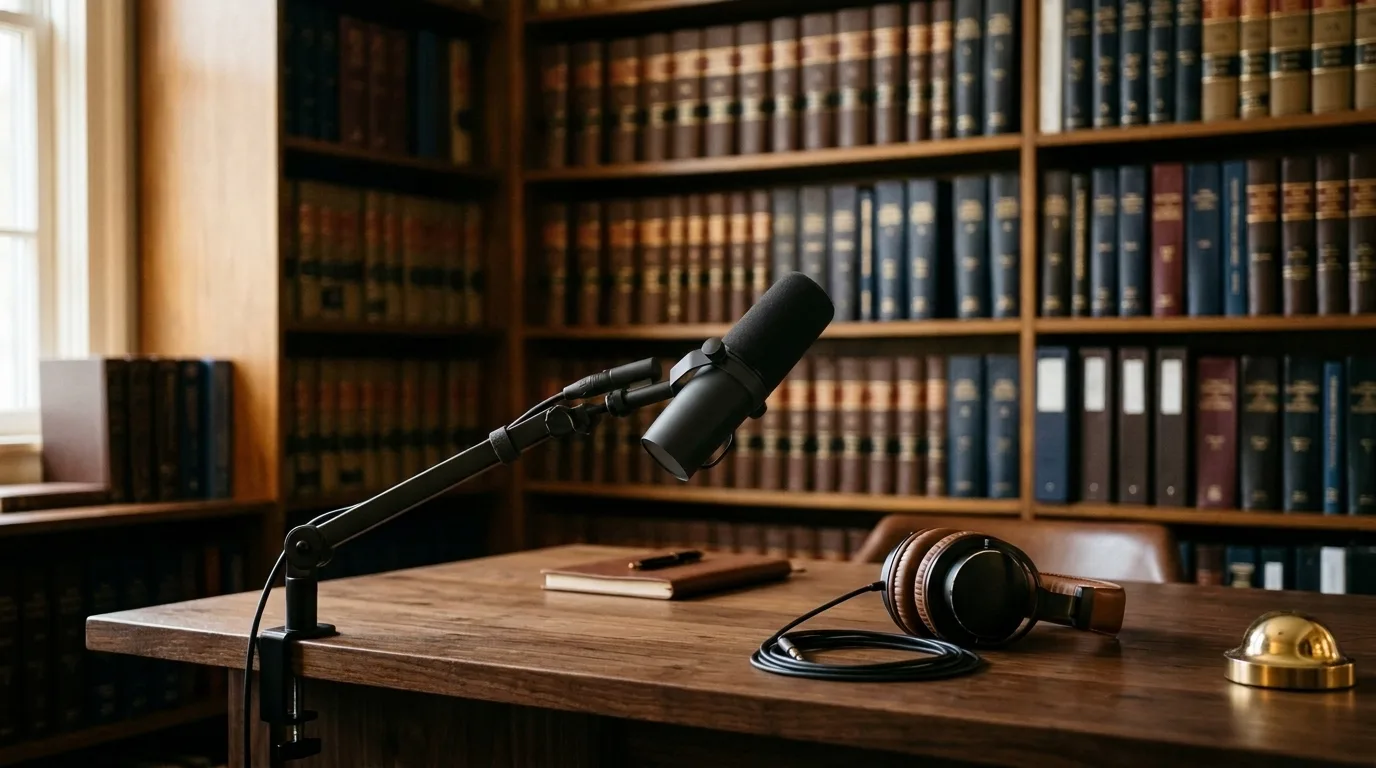
You do not need a studio. A decent microphone for each speaker, headphones and a quiet room with soft surfaces will sound better than an expensive setup in an echoey conference room. If you also want video, add a camera and simple lighting, and record the conversation so it works as both audio and video. For remote guests, use a recording tool that captures each person on a separate track, which makes editing much easier.
Recording and editing
- Outline, do not script. A short list of points keeps you on track and still sounds natural.
- Lead with the answer. Get to the useful part quickly. Listeners leave if the first minutes are small talk.
- Edit lightly. Remove long pauses, mistakes and off-topic tangents. A clean conversation is better than a heavily produced one.
- Add a short intro and outro. Say who you are, what the show is about and how to reach the firm.
Publishing and promotion
Use a podcast hosting service to publish your episodes. It distributes the show to the major podcast apps through one feed. Post the video version on YouTube as well, since many people now listen there. The guide to YouTube for lawyers covers that channel.
Then give each episode a second life. Put an episode page on your website with a summary and transcript, which helps people find it through search. Cut short clips for social media, mention new episodes in your newsletter and ask guests to share the episode with their audience. The guide to law firm content marketing explains how to build a system around content like this, and law firm social media marketing covers the clips.
The ethics rules
A podcast is a public communication about your services, so the advertising and professional conduct rules apply. The ABA Model Rules cover the main points, and most states follow them closely:
- Do not mislead. Model Rule 7.1 prohibits false or misleading statements about your services. Be careful about describing past results or making anything sound like a promised outcome.
- Protect client confidences. Model Rule 1.6 means you cannot discuss a client's case without consent, even if you leave out the name and think the details are harmless.
- Give information, not advice. Explain general principles, and say clearly that the show is not legal advice and that listening does not create an attorney and client relationship.
- Check your state. Some states have extra rules on advertising disclaimers, testimonials and filing materials for review. Check your state bar's rules before you launch.
How to tell if it is working
Download numbers matter less than you might think for a local firm. Better signs are consultations where people say they heard the show, referral partners who mention it, guests who send cases, and episode pages that bring visitors to your website. Ask new clients how they heard about you and record the answer, so you can see what the show contributes over time.
The short version
Decide who the show is for, pick a format you can keep up, and record in a quiet room with decent microphones. Publish through a hosting service and on YouTube, turn every episode into clips, a page on your site and newsletter content, and follow your state's advertising and confidentiality rules. A steady show builds trust and recognition that supports every other part of your marketing. For how it fits your wider identity, see law firm branding.
Frequently asked questions
Is a podcast worth it for a personal injury lawyer?
It can be, if you are consistent and the show speaks to the people you want as clients or referral sources. It builds trust and gives you content for other channels, but it works slowly and is not a replacement for advertising.
How long should a lawyer podcast episode be?
Long enough to answer the topic well and no longer. Many firms do well with short, focused episodes on a regular schedule.
What equipment does a lawyer need to start a podcast?
A good microphone for each speaker, headphones and a quiet room. Add a camera and lighting if you want a video version for YouTube.
Can I talk about my cases on a podcast?
Not without the client's consent. Confidentiality rules apply even if you leave out names. Talk about general principles or public matters instead, and avoid describing results in a way that could mislead.
Do I need a disclaimer on my podcast?
It is good practice to say the show is general information, not legal advice, and does not create an attorney and client relationship. Check your state bar's rules for any required wording.
A Podcast Builds Trust. Campaigns Bring the Calls.
A podcast helps people get to know your firm before they need a lawyer. Legal Leadz AI runs exclusive injury campaigns state by state and delivers each lead to one firm. Tell us the state and case types you want and we will show you what the volume looks like before you commit.
Get My Free Market Analysis →