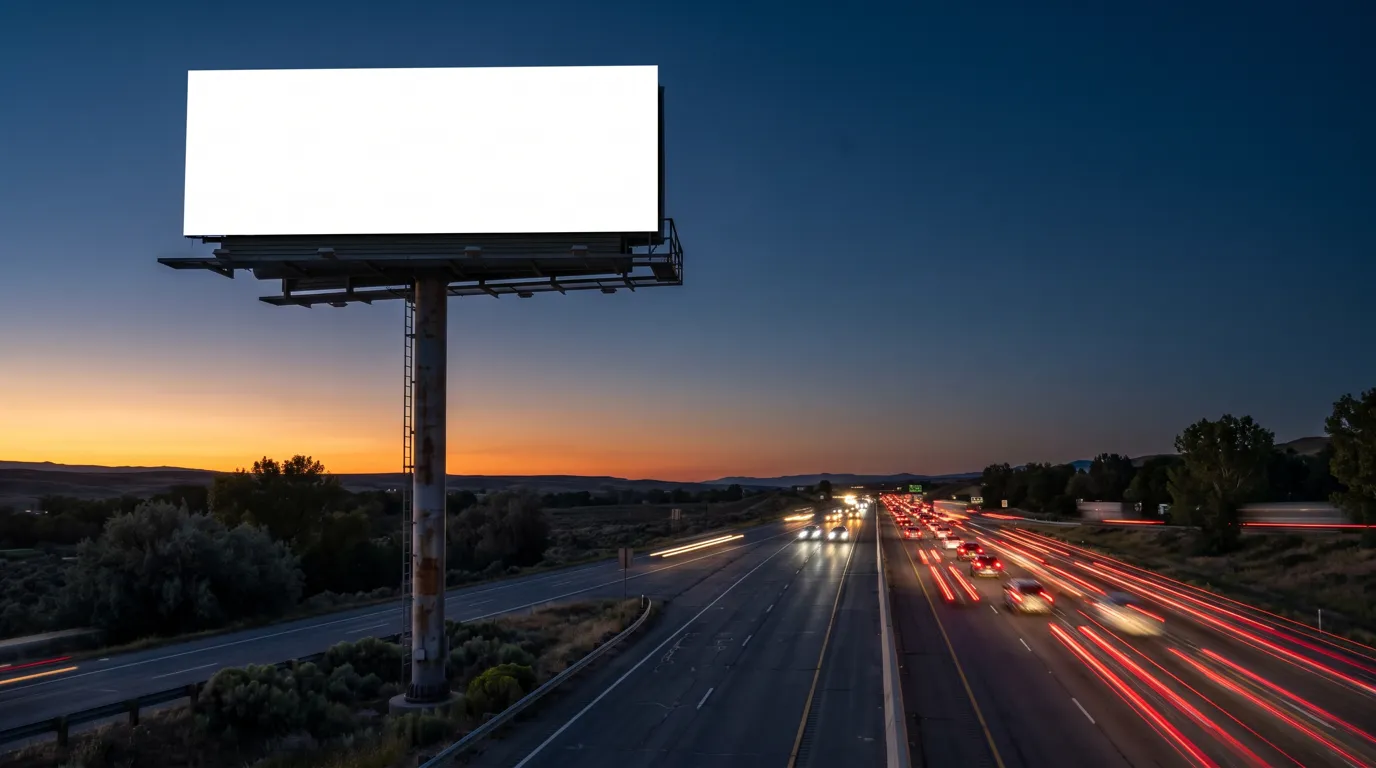
Billboards are one of the most visible forms of lawyer advertising. Drive any highway in a major market and you will see injury firms competing for the same stretch of road. For some firms they are a strong part of the plan. For others they are an expensive way to feel visible. This guide covers when a lawyer billboard makes sense, what to put on it, where to place it and how to tell whether it is working.
What a billboard actually does
A billboard is a recognition tool. People do not usually call a firm the moment they drive past a sign. They remember the name, and when they or someone they know is hurt, that name comes to mind first, or they recognize it when they search. That makes billboards a long term brand play rather than a direct response channel. The guide to law firm branding covers how recognition fits into the wider picture.
That distinction matters for planning. A billboard rarely replaces search, referrals or lead campaigns. It tends to make every other channel work a little better in the market where it runs.
When billboards make sense
- You are committed to a specific market. Recognition builds over time in one area. Short runs spread across many cities rarely add up.
- You can sustain it. A billboard that runs briefly and disappears is mostly wasted. Firms that benefit tend to keep a steady presence.
- The rest of your intake is ready. If calls go unanswered or callbacks are slow, more awareness only produces more missed opportunities.
- Your other channels are already working. Billboards amplify a firm people can find online. They do little for a firm with a thin website and no reviews.
What to put on a lawyer billboard
Drivers have a few seconds. The best billboards say very little and say it clearly:
- The firm name, large and easy to read.
- One idea, such as the case type you want, for example truck accidents or work injuries.
- One way to reach you, usually a short phone number or a simple web address that is easy to remember.
- A recognizable face or visual, if it fits your brand, kept consistent across every board.
Avoid long lists of practice areas, small print and anything a driver would need to read twice. If the sign needs a sentence to explain it, it is too complicated.
Where to place them
Placement should follow where your cases come from. Busy commuter routes, corridors with heavy truck traffic and roads near the hospitals and neighborhoods you already serve are common choices. Consistency across a few well chosen locations usually does more than a single board in a prestige spot. Digital billboards that rotate several advertisers can be a lower commitment way to test a market, though your message shares the screen.
How to measure a billboard
Billboards are harder to measure than search ads, but not impossible:
- A dedicated phone number on the board that is not used anywhere else, so calls to it can be counted.
- A simple, unique web address that points to a page only the billboard mentions.
- Asking every caller how they heard about the firm, and recording the answer consistently.
- Watching branded search for your firm's name in that market before and after a campaign starts.
Judge billboards on signed cases over a meaningful period, not on calls in the first few weeks. The guide to law firm KPIs covers the numbers worth tracking across every channel.
Stay inside the advertising rules
A billboard is lawyer advertising, and the same rules apply as anywhere else. Rules based on ABA Model Rule 7.1 prohibit false or misleading statements, and rules based on Model Rule 7.2 generally require advertising to include the name and contact information of at least one lawyer or firm responsible for its content. States adopt these differently, and many add their own requirements on disclaimers, past results, testimonials and words like specialist or expert. Check your state bar's rules before a design goes to print. The guide to lawyer advertising covers the rules in more detail.
Billboards in a wider marketing plan
Because billboards build recognition rather than immediate calls, they work best alongside channels that capture people when they are actively looking for help: search, local listings and lead campaigns. A firm that is known in a market and easy to find when someone searches gets the most from both. The guide to a law firm marketing plan covers how to balance brand and direct response spending.
Common mistakes
- Too many words for a driver to read.
- A phone number or web address that is hard to remember.
- Short runs that end before recognition can build.
- No way to measure calls that came from the board.
- Publishing results, titles or claims without checking state bar rules.
- Spending on awareness while intake still misses calls.
The short version
A lawyer billboard builds recognition in one market over time, not instant calls. It makes sense when you can commit to a market, sustain the presence and answer every call it brings. Keep the message to a name, one idea and one easy way to call. Place boards where your cases come from, give them their own number or web address so you can measure them, check your state's advertising rules and pair them with channels that capture people when they are searching.
Frequently asked questions
Do lawyer billboards work?
They can, mainly by building recognition in a market over time. They work best for firms that commit to an area, keep a steady presence and have strong intake and online visibility to back them up.
What should a lawyer billboard say?
As little as possible: the firm name, one clear idea such as the case type, and one easy way to call or visit.
Are there rules for lawyer billboards?
Yes. Billboards are lawyer advertising and must follow your state's rules, which are based on the ABA Model Rules and often add requirements about disclaimers, results and claims.
How do I track calls from a billboard?
Use a phone number or web address that appears only on the billboard, ask every caller how they heard about you and watch searches for your firm's name in that market.
Should a billboard replace online advertising?
Usually not. Billboards build recognition, while search and lead campaigns reach people who are actively looking for a lawyer right now. They work best together.
Billboards Build Recognition. Campaigns Fill the Calendar.
A billboard keeps your name in front of a market. Legal Leadz AI runs exclusive injury campaigns state by state and delivers each lead to one firm. Tell us the state and case types you want and we will show you what the volume looks like before you commit.
Get My Free Market Analysis →